2009 GMC Sierra 2500HD Wheel Interchange and Fitment Guide
Use this page to compare wheel and tire dimensions for a 2009 GMC Sierra 2500HD. The specifications below are the known reference values provided for this application. Equipment can vary by trim, package, axle configuration, and market, so confirm the original equipment information on your truck before purchasing wheels or tires.
Known OEM Fitment For 2009 GMC Sierra 2500HD
| Specification |
Known value |
| Bolt pattern |
8x180, meaning 8 studs on a 180 mm pitch circle diameter |
| Center bore |
116.7 mm |
| Thread size |
M14 x 1.5 |
| Rim diameter |
20 inches |
| Rim width |
9.0 inches |
| Wheel offset |
ET20, or 20 mm positive offset |
| Backspacing |
5.29 inches |
| Known tire size |
265/60R20 |
| Tire section width |
265 mm |
| Tire aspect ratio |
60 percent |
These values should be treated as a reference configuration, not as proof that every 2009 GMC Sierra 2500HD has the same original equipment wheel and tire package. Confirm the door-jamb tire label, owner manual, wheel markings, and VIN-specific OEM information before ordering.
The 8x180 bolt pattern and M14 x 1.5 thread size must match. A wheel with a different bolt pattern should not be forced onto the vehicle. The wheel must also provide suitable clearance for the brake assembly, suspension, steering components, hub, and fender.
How To Use The Wheel Interchange Calculator
Start with the calculator's “Wheels from” fields and enter the donor vehicle or donor wheel measurements. Then enter your 2009 GMC Sierra 2500HD in the “Installed on” fields. Compare bolt pattern, center bore, rim diameter, rim width, offset, and tire dimensions rather than relying only on a vehicle name.
For a custom setup, use the “Custom wheel size” controls to change rim diameter, rim width, and offset. Use the “Custom tire size” controls to change section width and aspect ratio. When you change rim diameter, the calculator updates the tire diameter in the comparison, which helps you evaluate overall size changes.
Use the comparison as a screening tool, not a substitute for a physical test fit or professional inspection. Calculator results cannot confirm every brake, suspension, fender, tire-load, or wheel-manufacturer limitation.
Fitment Checklist Before You Buy
Verify the complete wheel specification, including 8x180 bolt pattern, 116.7 mm center bore, 20 inch diameter, 9.0 inch width, and ET20 offset when matching the known reference configuration. Confirm whether the wheel is hub-centric or requires correctly sized hub-centric rings. Rings must center the wheel properly and must not be used to correct an incorrect bolt pattern.
Check the wheel's load rating against the truck's required axle and vehicle loads. A wheel that physically fits may still be unsuitable if its load rating is too low. Confirm the tire's load index, speed rating, inflation requirements, and intended use with the tire manufacturer and the vehicle label.
Inspect inner clearance at the brake caliper, upper and lower suspension components, steering parts, and inner wheel well. Inspect outer clearance at the fender and liner through the full steering range and suspension movement. Also check spare-tire compatibility, lug-seat type, valve-stem clearance, and TPMS compatibility.
Do not assume that a similar-looking GMC, Chevrolet, or aftermarket wheel is compatible. Confirm the exact casting, part number, bolt-seat design, offset, center bore, and load rating before purchase.
Plus Sizing And Common Upgrades
Plus sizing changes the wheel diameter while reducing tire sidewall height to maintain a similar overall tire diameter. The supplied reference tire is 265/60R20. If you change the wheel diameter, use the calculator to compare the resulting tire diameter and check speedometer, gearing, clearance, and load effects.
Increasing tire width can affect steering effort, road-rut sensitivity, inner suspension clearance, and fender clearance. Changing offset changes the wheel's position relative to the hub, suspension, and fender. Lower positive offset generally moves a wheel outward, while higher positive offset generally moves it inward, but the exact result depends on the original and replacement dimensions.
For a heavy-duty pickup, prioritize wheel load rating, tire load capacity, sidewall protection, and clearance over appearance. Do not select a tire solely because its diameter or width appears close to the original size.
Installation Tips
Clean the hub face and wheel mounting surface before installation. Remove rust, dirt, paint buildup, and debris that could prevent the wheel from seating flat. Never stack loose spacers, washers, or incompatible adapters to correct a fitment problem.
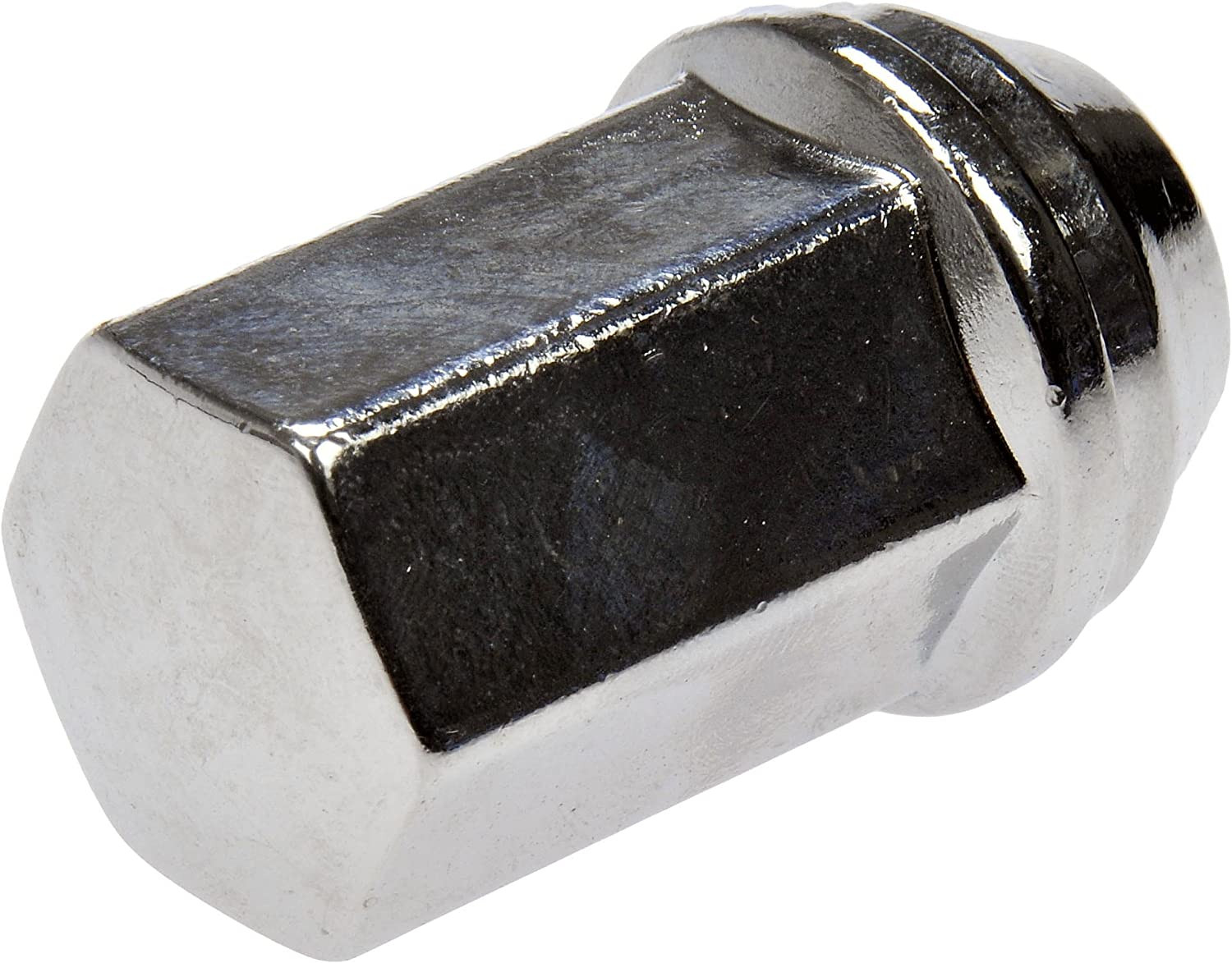
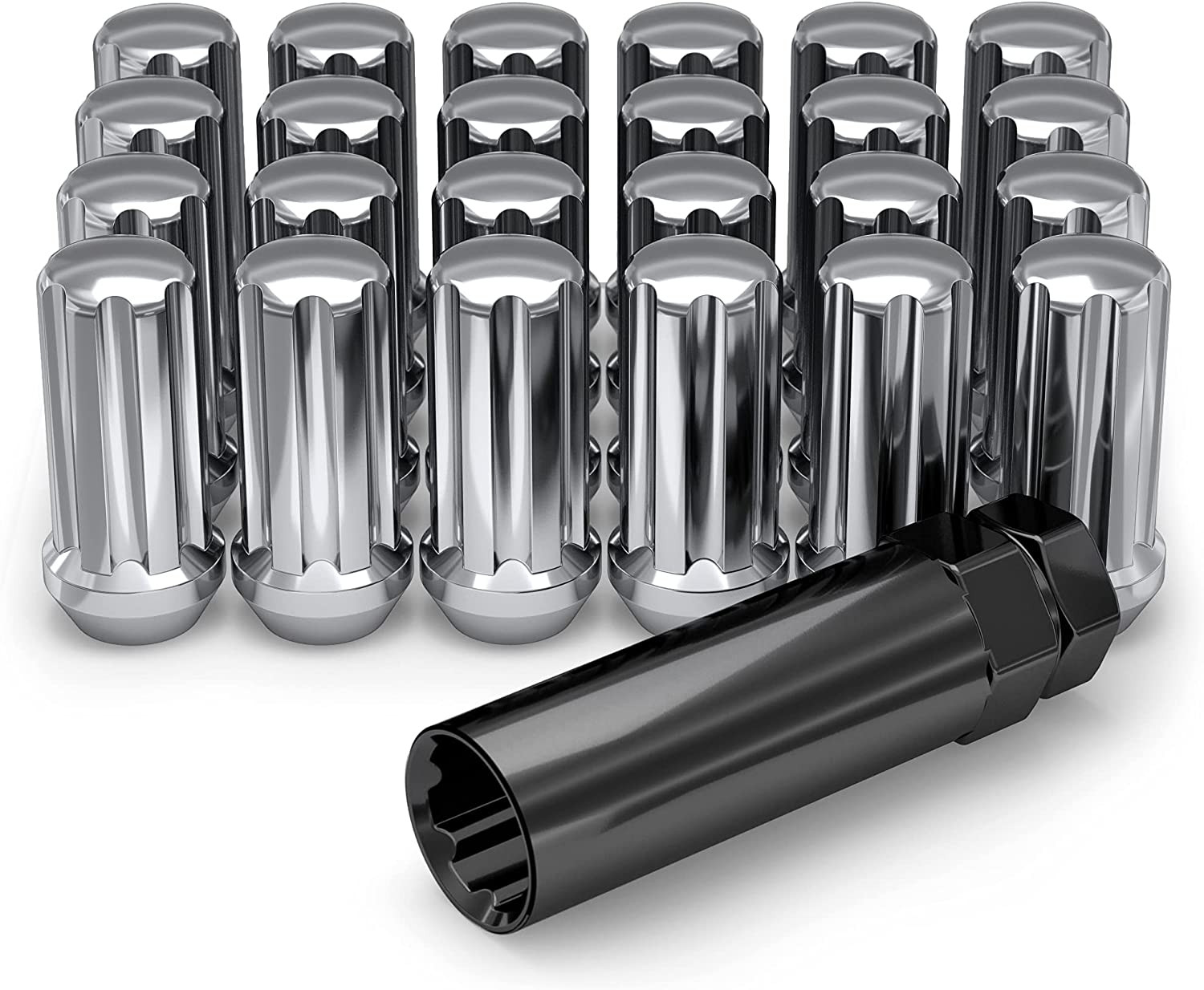
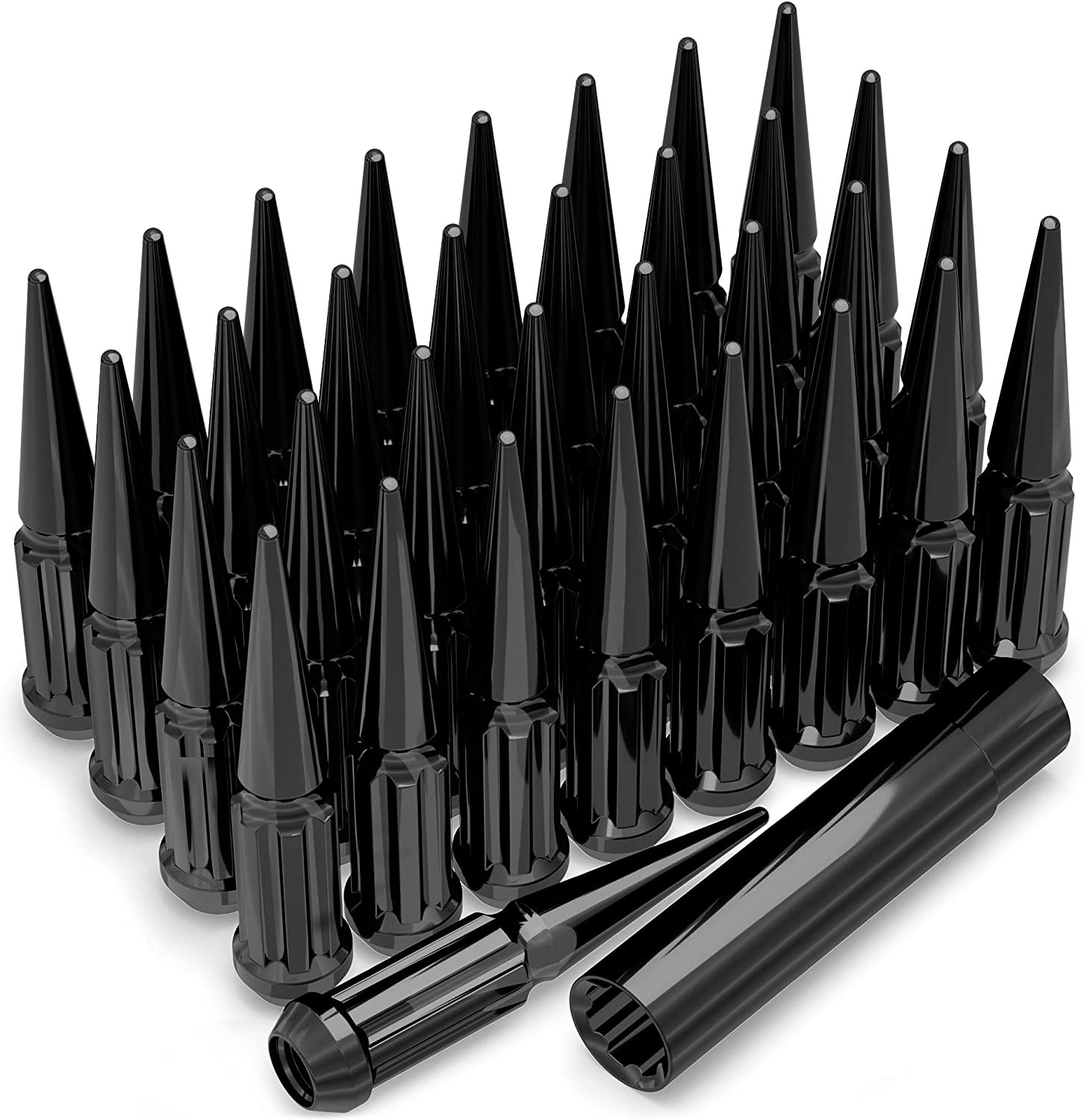
Use the correct M14 x 1.5 lug hardware and confirm that the lug nuts match the wheel's seat type and thread engagement requirements. Hand-start every lug nut to avoid cross-threading. Tighten in a star pattern, then torque the lugs to the vehicle or wheel manufacturer's specified value using a calibrated torque wrench.
After installation, verify that the wheel rotates freely and that there is no contact with the brake components, suspension, steering system, or bodywork. Recheck lug torque after the first drive interval specified by the vehicle or wheel manufacturer. Recalibrate or relearn TPMS when required.
Tools And Helpful Supplies
Useful supplies include a calibrated torque wrench, the correct lug socket, a jack and appropriately rated jack stands, wheel chocks, a tire-pressure gauge, and a wire brush for cleaning hub surfaces. Choose equipment rated for the weight of the truck and follow safe lifting-point procedures.
Shop automotive torque wrenches and lug sockets on Amazon.
A tread-depth gauge, tire-pressure monitoring tool, and hub-measuring caliper can also help verify a used wheel and tire assembly. These tools do not replace professional inspection of cracks, bends, tire damage, or load-rating requirements.
Shop tire pressure and tread inspection tools on Amazon.
FAQs
What is the bolt pattern for a 2009 GMC Sierra 2500HD?
The known reference bolt pattern is 8x180. Confirm the vehicle-specific specification before ordering, especially if the truck has replacement wheels or uncertain service history.
What is the center bore?
The known center bore is 116.7 mm. An aftermarket wheel with a larger bore may require correctly sized hub-centric rings. A smaller bore will not fit over the hub unless the wheel is properly machined by a qualified specialist, and machining may affect wheel suitability.
What is the known original tire size?
The provided reference tire size is 265/60R20. Tire size can vary by trim or equipment package, so verify the tire label on the truck and compare alternatives in the calculator.
Can I install wheels from another vehicle?
Only if the donor wheels meet all required specifications. Check the 8x180 bolt pattern, 116.7 mm hub relationship, compatible lug hardware, wheel load rating, diameter, width, offset, brake clearance, and tire requirements. A matching bolt pattern alone is not enough.
Does wheel offset affect clearance?
Yes. Offset changes how far the wheel sits inward or outward from the hub mounting face. Compare the donor and installed offset in the calculator, then confirm clearance physically with the vehicle safely supported and the steering moved through its full range.
Can I use a different wheel diameter?
A different diameter may be possible, but compatibility is not confirmed by diameter alone. Use the calculator to compare tire diameter, width, aspect ratio, and offset, then verify brake clearance, load capacity, speedometer effects, and fender clearance.
Should I use wheel spacers?
Do not use spacers as a casual solution for incorrect fitment. Any spacer or adapter must be specifically engineered and rated for the vehicle, wheel, load, and intended use, with correct hub engagement and lug engagement. Professional advice is recommended before using one.
How do I confirm the correct specifications for my truck?
Check the driver's-door tire and loading label, owner manual, OEM parts information, wheel markings, and VIN-specific dealer or manufacturer records. Compare those sources with the calculator results before buying or installing parts.