OEM wheel and tire fitment specs for the 2020 Ford Fusion, including bolt pattern (PCD), center bore diameter, thread size, rim diameter, rim width, wheel offset, and backspacing.
Recorded OEM specifications for the 2020 Ford Fusion, donor years with overlapping ranges, and a calculator to compare a selected wheel. Range overlap is not a guaranteed fit.
Multiple OEM configurations exist for this vehicle. Fitment can vary by trim, brakes, and factory wheel package – confirm your exact setup before buying.
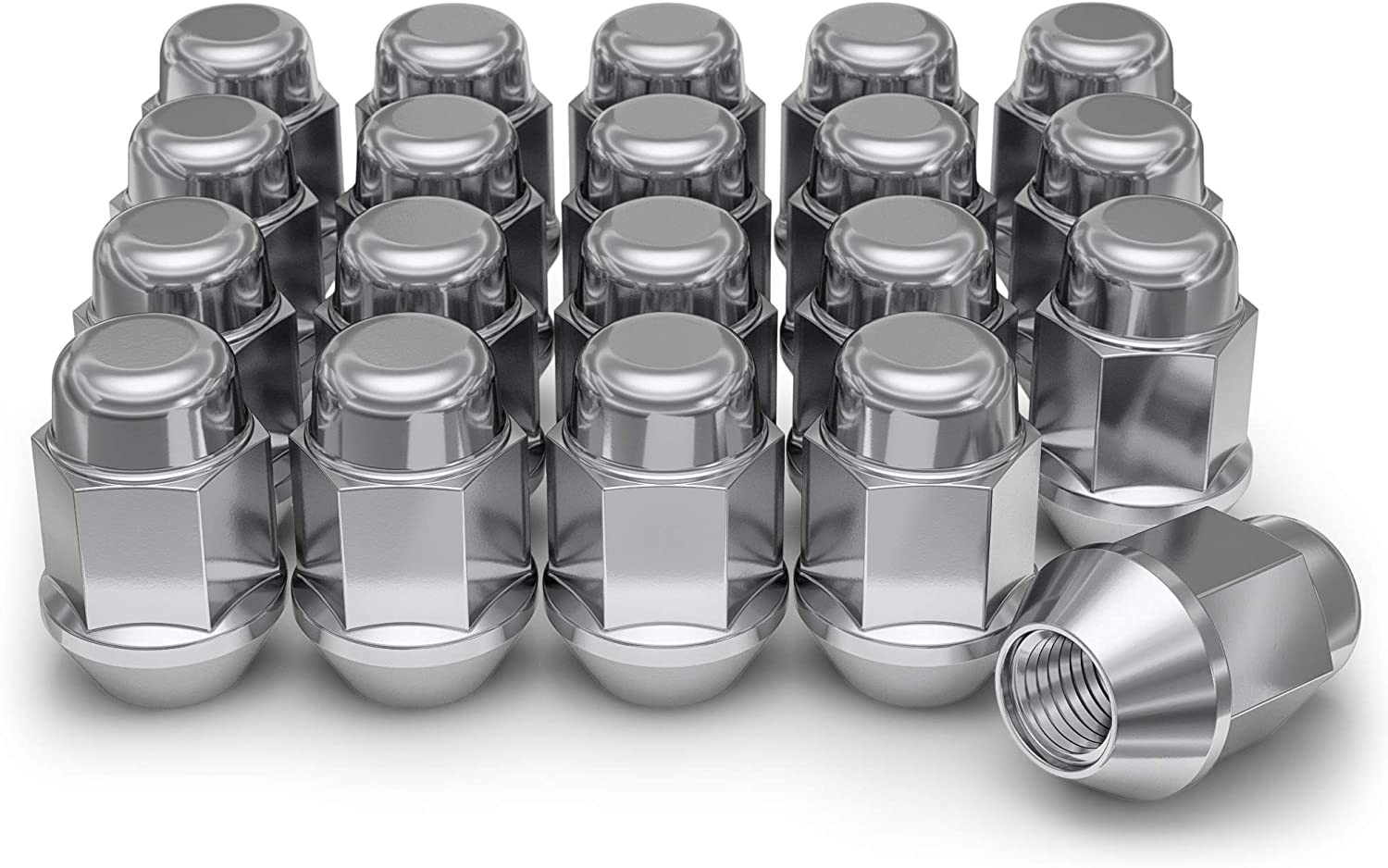
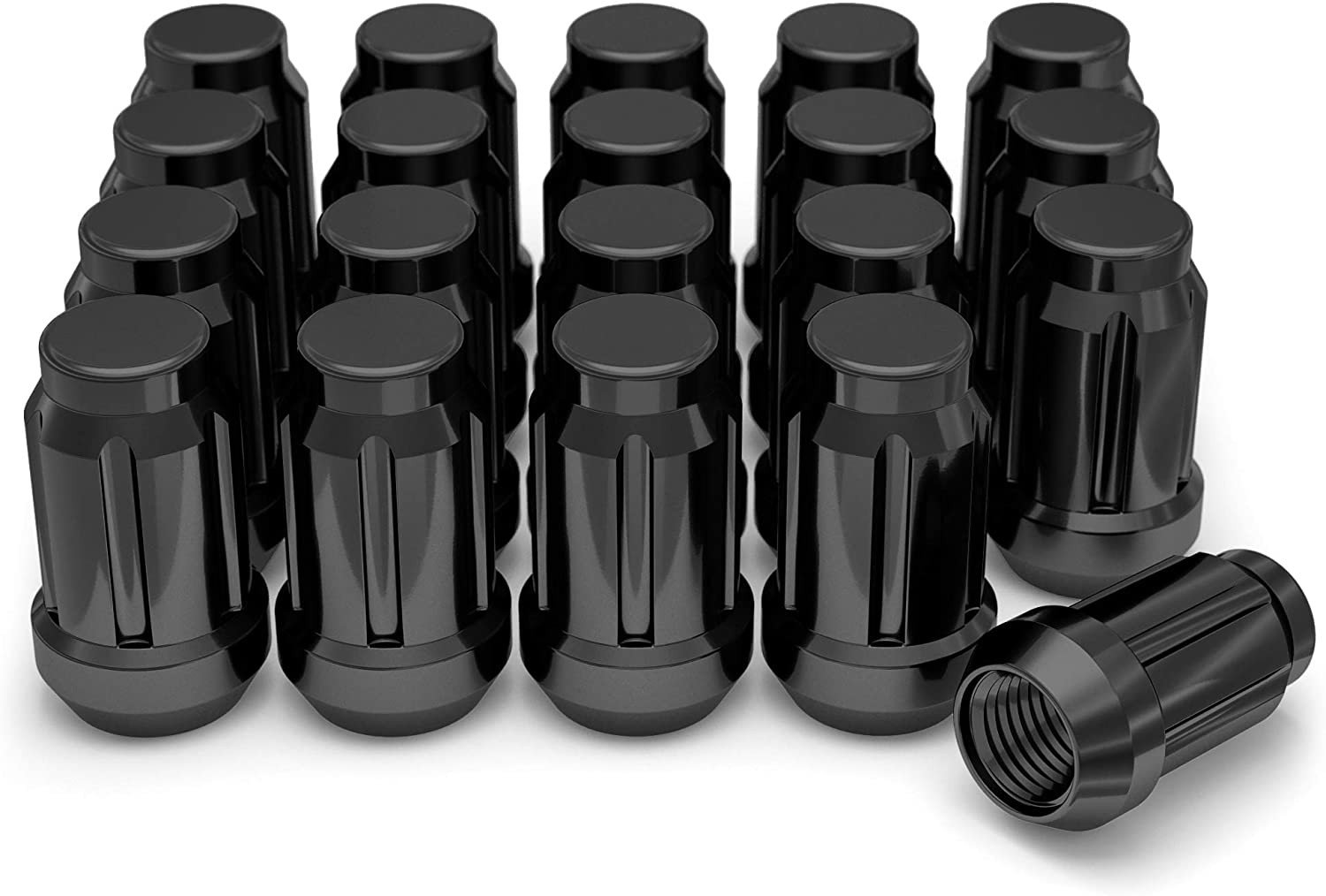
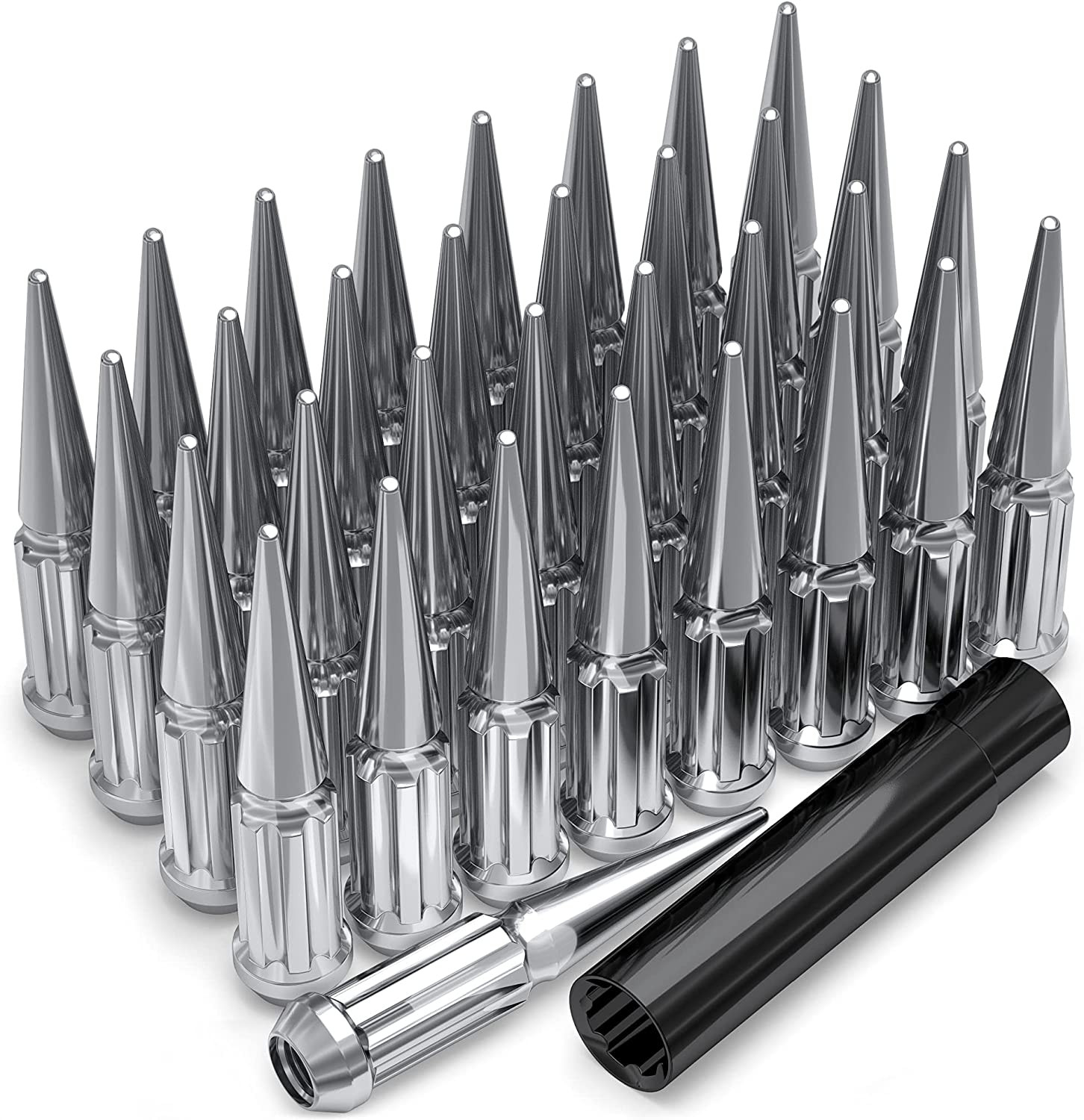
Thread-only product links are shopping examples, not verified fits. Seat style is not confirmed here. As an Amazon Associate we earn from qualifying purchases.
Donor vehicles with overlapping OEM specs
These are vehicle-year records whose recorded OEM ranges overlap this 2020 Ford Fusion. Overlap is not a guarantee that a specific wheel will install. Selected-wheel comparison is in the calculator below.
Evaluated 74 donor years. Listed 24 eligible overlaps (not all evaluated years are compatible). Showing all listed.
Wheel geometryOEM width/offset ranges overlap (not a specific wheel)
Recorded OEM bolt pattern, center bore, and width/offset ranges overlap. This is not a guarantee that every wheel from the donor year fits this vehicle.
Check lug hardwareCheck lug hardware: donor year M14x1.5 vs 2020 Ford Fusion M12x1.5
Bolt pattern5x108 · Same recorded PCD
Center bore63.4 mm · same recorded hub figure
Wheel geometryOEM width/offset ranges overlap (not a specific wheel)
Recorded vehicle-side thread for the 2020 Ford Fusion is M12x1.5. This donor year is recorded as M14x1.5. That is the vehicle stud/nut thread, not an intrinsic thread stamped on the wheel. Hardware must match this vehicle’s studs and the selected wheel’s seat and engagement. Existing hardware may be reusable if it already matches. Seat style is not in this dataset, so products are not a verified fit.
Recorded vehicle-side thread differs (M14x1.5 on the donor year vs M12x1.5 on the target vehicle). Hardware must match the target vehicle’s studs and the selected wheel’s seat. Existing hardware may be reusable if it already matches. Seat style is not confirmed in this dataset.
Wheel geometryOEM width/offset ranges overlap (not a specific wheel)
Recorded OEM bolt pattern, center bore, and width/offset ranges overlap. This is not a guarantee that every wheel from the donor year fits this vehicle.
OEM specs overlapOEM ranges overlap – confirm the specific wheel
Bolt pattern5x108 · Same recorded PCD
Center bore63.4 mm · same recorded hub figure
Wheel geometryOEM width/offset ranges overlap (not a specific wheel)
Recorded OEM bolt pattern, center bore, and width/offset ranges overlap. This is not a guarantee that every wheel from the donor year fits this vehicle.
OEM specs overlapOEM ranges overlap – confirm the specific wheel
Bolt pattern5x108 · Same recorded PCD
Center bore63.4 mm · same recorded hub figure
Wheel geometryOEM width/offset ranges overlap (not a specific wheel)
Approximate position vs the mid OEM package: outer change -1.35 mm, inner change -11.35 mm. This uses aggregated width/offset ranges, not a specific wheel.
Wheel geometryOEM width/offset ranges overlap (not a specific wheel)
Recorded OEM bolt pattern, center bore, and width/offset ranges overlap. This is not a guarantee that every wheel from the donor year fits this vehicle.
Wheel geometryOEM width/offset ranges overlap (not a specific wheel)
Recorded vehicle-side thread for the 2020 Ford Fusion is M12x1.5. This donor year is recorded as 1/2"-20UNF. That is the vehicle stud/nut thread, not an intrinsic thread stamped on the wheel. Hardware must match this vehicle’s studs and the selected wheel’s seat and engagement. Existing hardware may be reusable if it already matches. Seat style is not in this dataset, so products are not a verified fit.
Recorded vehicle-side thread differs (1/2"-20UNF on the donor year vs M12x1.5 on the target vehicle). Hardware must match the target vehicle’s studs and the selected wheel’s seat. Existing hardware may be reusable if it already matches. Seat style is not confirmed in this dataset. Approximate position vs the mid OEM package: outer change 5 mm, inner change -5 mm. This uses aggregated width/offset ranges, not a specific wheel.
Ford Fusion Years With Compatible Wheels
Only years with evidence-based interchange relationships are listed. Adjacent years are not assumed compatible.
Compare a donor vehicle or custom wheel against this 2020 Ford Fusion. Use Compare in calculator on a donor row above to fill the donor side of this same calculator.
Compare
Compare wheel compatibility between two vehicles
Wheels from (donor vehicle)
Selected Car:
Custom wheel size (optional)
Tip: change values here to simulate custom wheels and immediately see the impact in the comparison below.
Custom tire size (optional)
Installed on (your vehicle)
Selected Car:
2020 Ford Fusion
Compare Rims
Specification
Wheels from
Installed on
Result (Click it)
Bolt Pattern
The total number of bolt holes and the diameter of the circle they form.
-
5x10⁸
Center Bore
The hole in the center of the wheel that fits over the vehicle’s hub.
-
63.4 mm
Thread Size
The size and spacing of the threads on the bolts or nuts that hold the wheel in place.
-
M12 x 1.5
Rim Diameter
The wheel diameter in inches that determines which tire sizes will fit.
-
16"
Rim Width
The distance between the inner edges of the wheel is measured in inches.
-
6.5"
Wheel Offset
How far the wheel sits inward or outward relative to the hub mounting surface.
-
50 mm
Backspacing
Shows how much space the wheel takes up toward the inside of the vehicle.
-
-
Wheel Fasteners
The type of hardware used to secure the wheel to the vehicle.
-
-
Compare Tires
Specification
Wheels from
Installed on
Result (Click it)
Section Width
The width of the tire from sidewall to sidewall, measured in millimeters.
-
-
Aspect Ratio
The height of the tire’s sidewall expressed as a percentage of its width.
-
-
Diameter
The wheel diameter for which the tire is designed to fit.
-
-
Tire Pressure
The recommended air pressure for safe and efficient driving.
-
-
Overall Diameter
The total height of the tire and wheel combined affects clearance and speedometer accuracy.
-
-
Wheel Fitment Parts for the 2020 Ford Fusion
Example products matched to recorded thread, hub, or spacer dimensions. They are not verified fits. Confirm seat style, thickness, and clearance before ordering.
As an Amazon Associate we earn from qualifying purchases. Product availability and pricing may change.
Decision
Objective: select safe, compatible wheels and tires for a 2020 Ford Fusion while minimizing modification and preserving handling, braking, and clearance. I observe the known OEM fitment and evaluate alternatives relative to that baseline. Evidence will drive interpretation and the final recommendation rather than assumptions.
Constraints
Known OEM fitment data for the 2020 Ford Fusion (use this as the baseline):
Bolt pattern (studs x PCD)
5x10⁸
Center bore (mm)
63.4
Thread size
M14 x 1.5
Rim diameter (in)
18
Rim width (in)
8.0
Wheel offset (ET, mm)
55
Backspacing (in)
6.17
Tire section width (mm)
215
Tire aspect ratio (%)
60
Tire rim diameter (R)
16
Limitations and anomalies: the listed rim diameter of 18 inches conflicts with the tire rim diameter entry of 16 inches. That inconsistency is a limitation in the provided data. I cannot resolve it here. Hypothesis: either the tire values refer to an alternate trim, or a data-entry error occurred. To confirm, consult the vehicle door placard, the owner manual, or use the on-page calculator to test consistent wheel/tire combinations.
Unknowns you should confirm before buying: lug seat type (conical vs ball), factory lug torque spec, and whether the OEM wheel is hub-centric or lug-centric. The on-page calculator and OEM sources can confirm these variables.
Options
Options fall into four practical groups, each with trade-offs.
Replace like-for-like OEM: match 5x10⁸, 63.4 mm CB, M14x1.5, 18x8.0 in, ET55. Minimal change to handling and systems.
Aftermarket direct-fit: wheels with identical bolt pattern and center bore, and offset and width near OEM. May require hub-centric rings or different lug nuts depending on seat type.
Change size or offset: larger or smaller rim diameter, different width, or offset outside ET55. This affects rolling diameter, scrub radius, and fender clearance and needs tire matching and suspension check.
Adapters or spacers: allow non-standard bolt patterns or desired offset. They introduce additional failure points and require correct torque, studs, and legal consideration.
Comparison
I compare each option against the OEM baseline along three dimensions: mechanical compatibility, handling/clearance impact, and installation complexity. The comparison is evidence-driven and step by step.
Mechanical compatibility
Matching bolt pattern and center bore is the primary requirement. A wheel with 5x10⁸ and a 63.4 mm bore will mount without hub-spacer correction in most cases. Thread size M14x1.5 matches OEM studs; using lug nuts with the correct thread and seat is essential. If seat type is unknown, do not assume compatibility; confirm physically or via OEM documentation.
Handling and clearance
Offset change interpretation is straightforward. A decrease in offset by 10 mm moves the wheel outer face outward by approximately 10 mm relative to the body, increasing track width by about 20 mm if applied to both sides. That increases scrub radius and wheel leverage on bearings. Increasing offset pushes the wheel inward and can cause inner clearance issues with suspension components.
Rim width and diameter changes require tire size adjustments to keep overall rolling diameter stable. The on-page calculator will update tire diameter when you change rim diameter. Use it to keep overall diameter within a few percent of OEM to avoid speedometer, ABS, and gearing effects.
Installation complexity and risk
OEM or near-OEM direct-fit wheels carry the least installation risk. Aftermarket choices that match critical dimensions still require verification of lug seat type and torque specifications. Adapters and large offset changes raise mechanical and legal risks and merit inspection by a qualified technician.
Recommendation
Interpretation of the evidence leads to a conservative and verifiable approach. Prefer wheels that match the known OEM parameters: 5x10⁸ bolt pattern, 63.4 mm center bore, M14 x 1.5 thread, 18x8.0 in rim size, and ET55 offset. If you must change diameter or width, keep overall tire diameter within about 3 percent of OEM and offset within roughly 10 mm of 55 mm as a starting hypothesis, then validate with the on-page calculator.
Steps I recommend, in order:
Confirm the correct OEM tire rim diameter and the factory lug seat type and torque spec using the door placard, owner manual, or dealer. Do not rely solely on the table above because of the rim-diameter discrepancy.
Use the on-page calculator to model any alternative wheel and tire package. Adjust rim diameter, width, offset, and tire section/aspect ratio until the calculated overall diameter and track changes fall within acceptable limits.
If buying aftermarket wheels, verify center bore and bolt pattern, and keep lug seat type and thread compatible. If center bore is larger, obtain properly sized hub-centric rings; if smaller, it will not fit.
Have lug nuts torqued to OEM spec and rechecked after 50 to 100 miles. If you plan to use spacers or adapters, plan for professional installation and inspection.
If you need tools, consider a calibrated torque wrench and hub-centric rings to reduce risk and ensure correct installation. Example searches: torque wrench and hub centric rings.
Explicit risks and how to mitigate them are listed for a skeptical evaluator.
Rubbing and clearance failure. Mitigation: use the calculator to preview gap, test-fit before driving, and if necessary, choose a different offset or width.
Incorrect lug fit or seat type. Mitigation: confirm lug seat shape and thread pitch. Use OEM lug nuts or correct aftermarket equivalents.
Speedometer, ABS, and stability effects from incorrect rolling diameter. Mitigation: keep overall tire diameter close to OEM or recalibrate systems where supported.
Wheel bearing and suspension load changes from large offset/width changes. Mitigation: limit offset deviation, inspect bearings after initial miles, and consult a technician for significant changes.
Legal and inspection issues with adapters or non-factory modifications. Mitigation: check local regulations and use professionally approved components and installation.
Limitations remain. I cannot resolve the rim diameter inconsistency within this analysis. The on-page calculator and OEM sources are the intended tools to close that gap and validate any package before purchase or installation.
Conclusion: match critical OEM dimensions where possible, verify unknowns with OEM documentation or on-site measurement, and use the calculator to test alternatives before committing. That sequence reduces risk and moves the decision from skepticism to justified confidence.
Methodology and sources
Wheel interchange depends on more than bolt pattern. Where data is available, this site compares recorded OEM values:
Bolt pattern / PCD
Center bore direction (donor wheel bore must not be smaller than the hub)
Wheel diameter, width, and offset against known OEM ranges
A normal wheel spacer does not change bolt pattern. Hub rings cannot enlarge a wheel bore that is smaller than the hub. Brake clearance and tire package fitment still require vehicle-specific checks when not confirmed in the dataset.